
Sanitary dispenser & incinerators
This idea originated from the practice of having male protective gears at the washroom. There are moments when ladies who experience irregular monthly periods get their menses when they don’t expect. Having sanitary pad dispenser located at the ladies’ washrooms seeks to avert this occurrence. To avoid misuse of these sanitary pads especially in public washrooms, the users will be required to insert some coins or use Mpesa to pay for the pads to be dispensed. After using a sanitary pad, proper disposal is encouraged. The idea of the incinerator was actualized to ensure that all the sanitary pads that will be disposed are properly disposed through burning in the incinerator.
This innovation was developed by Catherine Wajoya of Silmak Agencies. The product has been in the market since 2019 after a successful piloting and patenting of the 2 products in 2018. Their customer segments include learning institutions, waste management companies, factories, county governments public facilities and urban offices. Notable customers include Nairobi University, Jungle nut company Thika, IGAD office in Nairobi, Rombo Girls School, among others. The incinerators and dispensers are locally manufactured. They have been outsourcing the fabrication of the machine enclosures, import machine accessories and they assemble in their warehouse. They have had challenges with outsourcing the fabrication of the machine such as long lead times affecting our order fulfilment and poor workmanship. This is what has made them want to do in-house fabrication aside reduction of production costs. The demand for incinerators in schools has been increasing since the schools resumed. This is because they have discovered the same menstrual incinerators can be also incinerate used masks and other PPEs. Last year, they partnered with Safaricom and developed MPESA sanitary pad dispensers. They have co-branded this product.
This product has been incubated in MUST for the last 3 years. Meru University though the incubation center ensures that the innovators follow the implementation/rolling out schedule as they submitted to KENIA. Partly, the incubation center ensures that the funds this innovation was allocated are utilized well. Finally, improvements to the product through automation and other adjustments have been realized through collaborations. A brief demonstration how the sanitary dispenser and the incinerator are here: https://www.youtube.com/watch?v=J0hw-yeUsHU , https://www.youtube.com/watch?v=uYRrUBDyGHM.
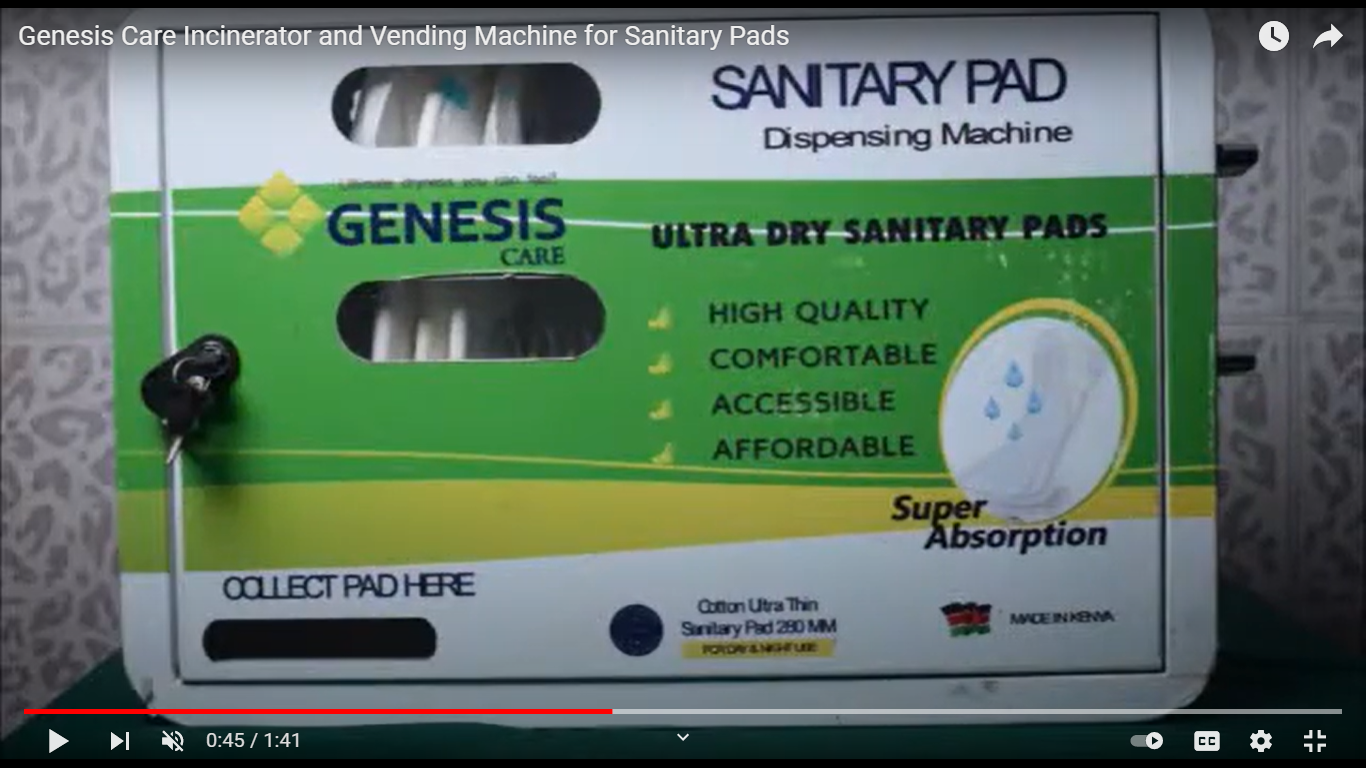
A front view of the Sanitary dispenser